Walks, in board order
Each walk follows one material through one neighbourhood. They run from about forty minutes to a slow morning.
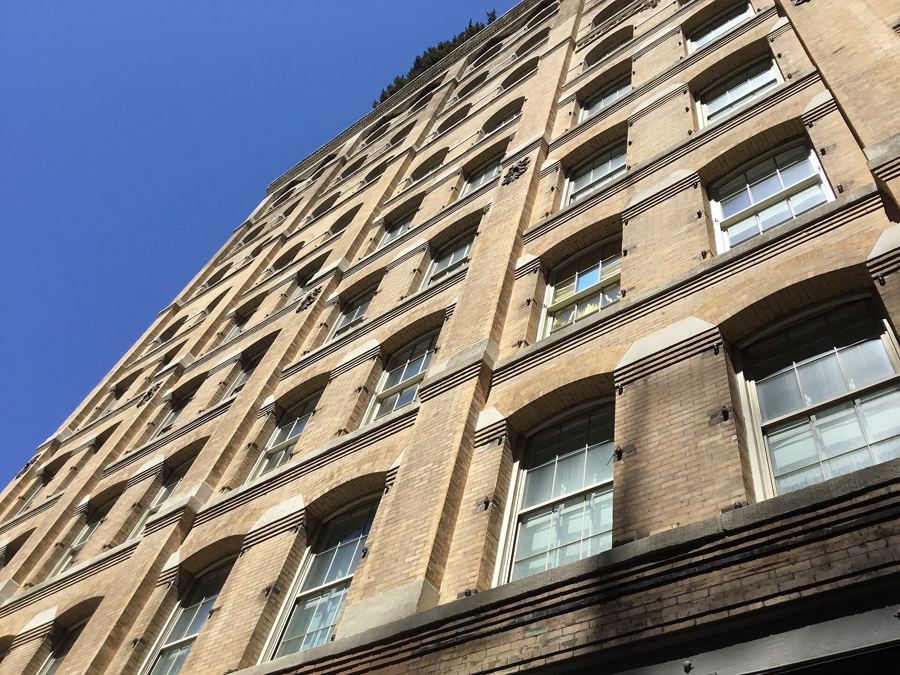
Tribeca's warehouse blocks, Harrison to Hubert
A loop through the brick store-and-lofts west of Hudson Street, where loading docks, round arches and iron shutters still explain what these buildings were built to hold.
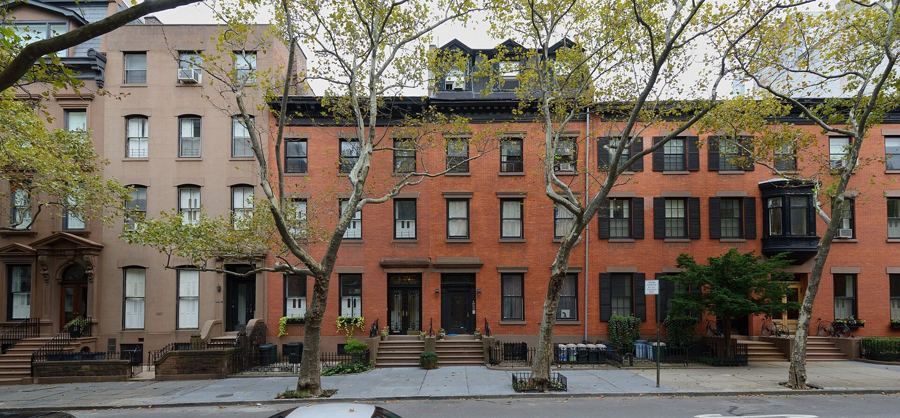
Middagh Street and the oldest houses in the Heights
The north streets of Brooklyn Heights still hold Federal-era brick and clapboard houses. Read them first, then walk south and watch the brick give way to Greek Revival stone and brownstone.
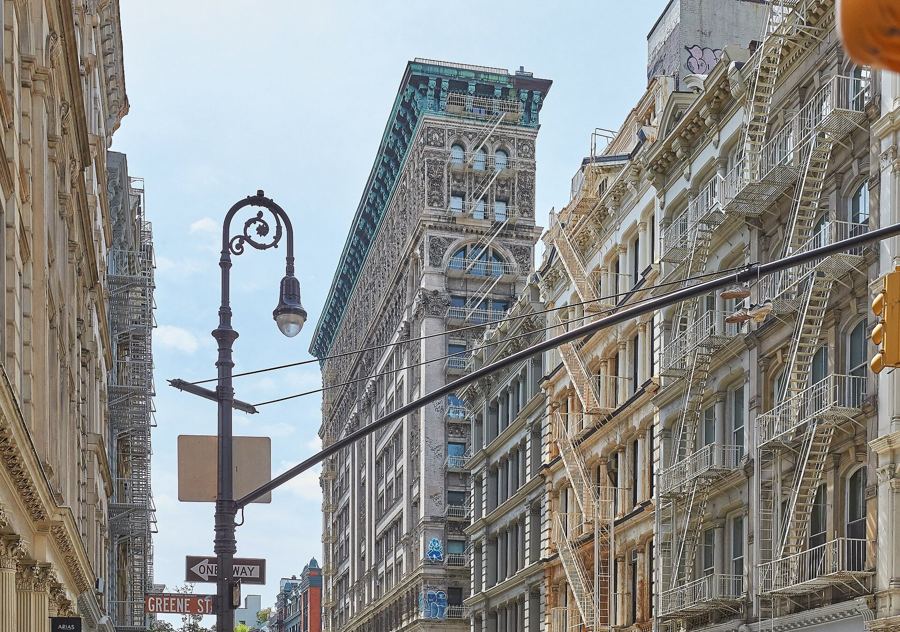
Greene Street, block by block
Five short blocks of SoHo hold one of the densest runs of cast-iron facades anywhere. Walk them north from Canal Street and learn to read columns, cornices, vault lights and loading platforms.
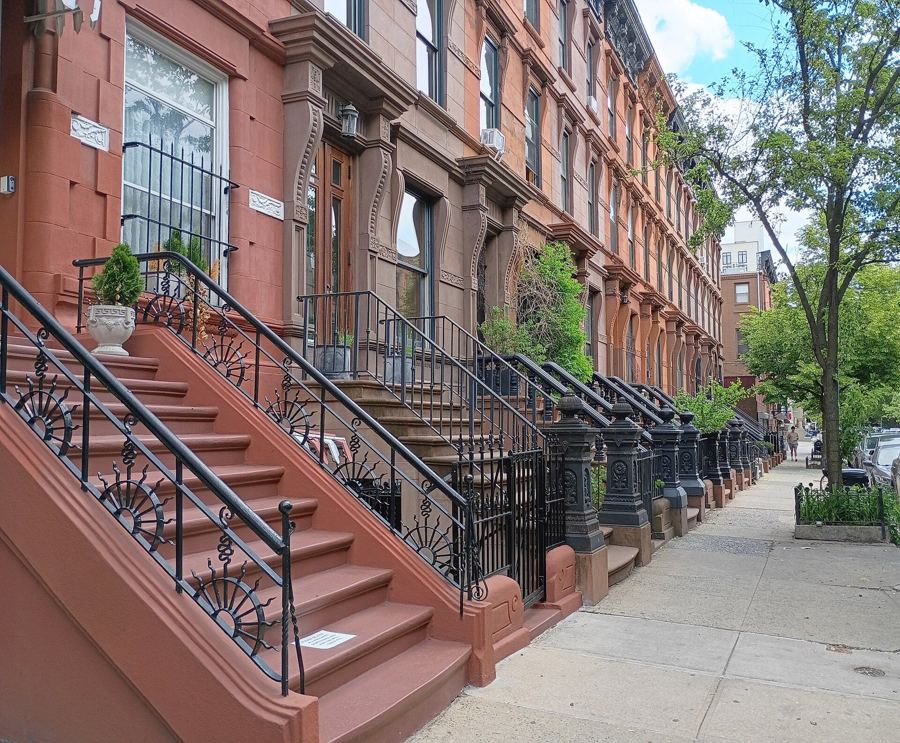
Harlem's rows, from Mount Morris to Strivers' Row
Harlem holds some of the finest row houses in New York. Walk from the brownstones around Marcus Garvey Park to the brick of Strivers' Row and the stone rows of Hamilton Heights.
Bleecker Street's white tower
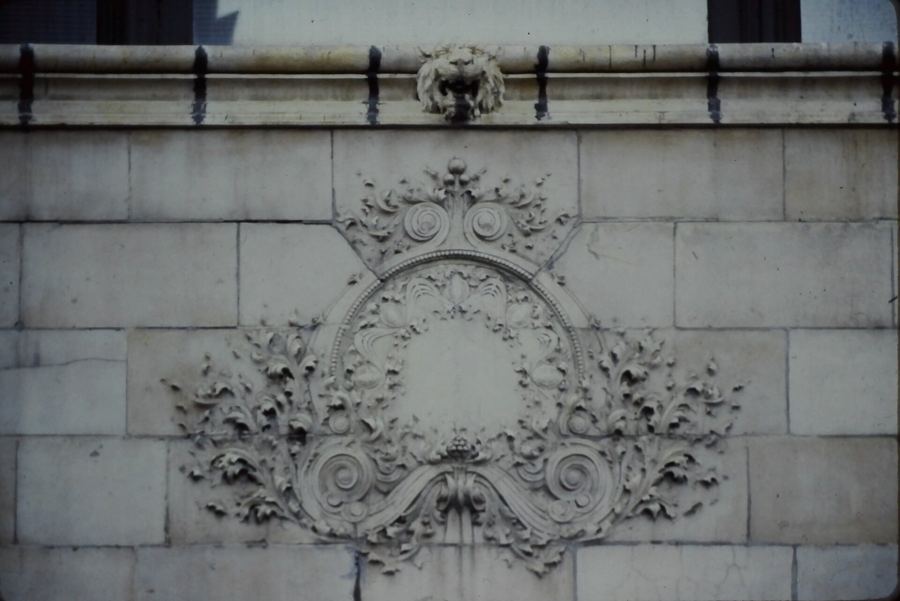
The Bayard-Condict Building is Louis Sullivan's only work in New York: thirteen storeys of pale terracotta over a steel frame, best read from the top of Crosby Street.
Look up on lower Broadway
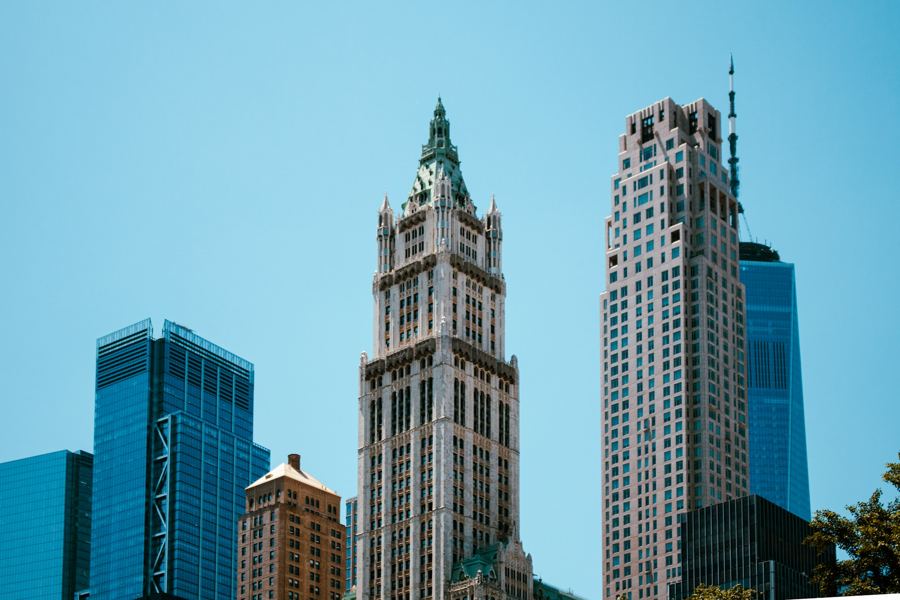
Cass Gilbert's Woolworth Building wears a skin of glazed terracotta made to look like carved stone. City Hall Park is the best seat in the house for reading it.
Grand Central from Park Avenue and 42nd
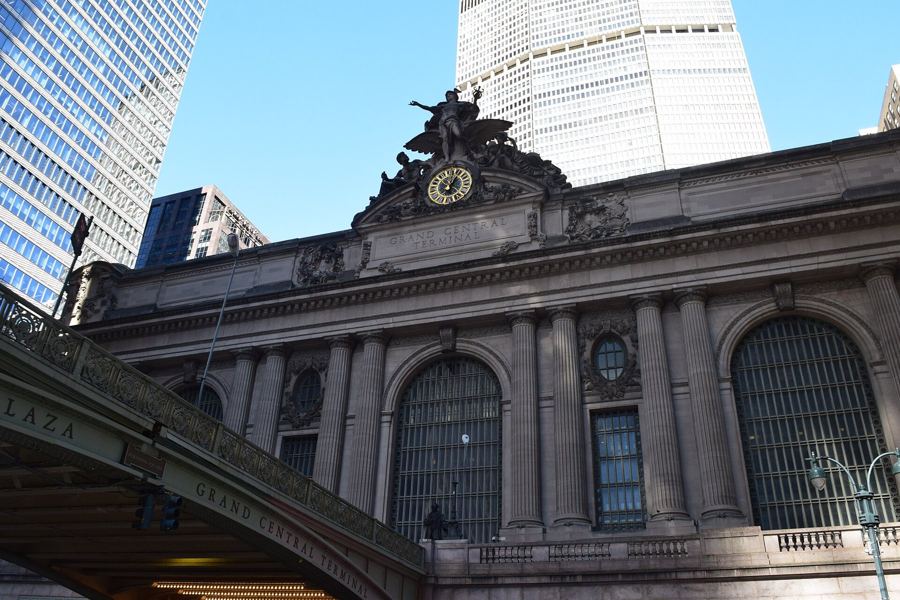
The terminal's south front is a stone triumphal arch for trains: Indiana limestone over a granite base, three great windows and a sculpture group crowned by Mercury.
Fifth Avenue's pale mile
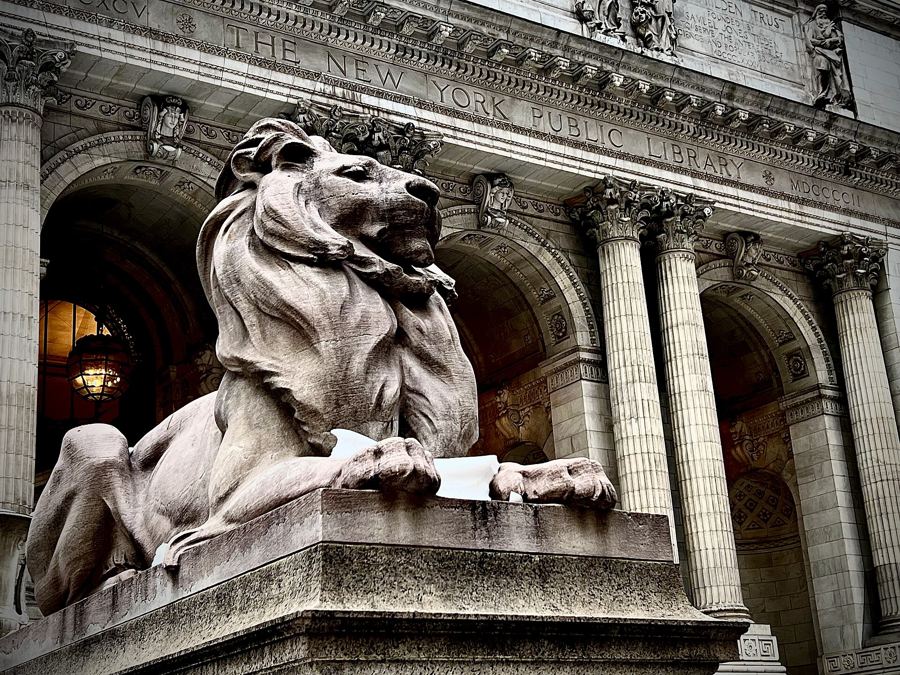
From the library at 42nd Street to Grand Army Plaza, Fifth Avenue is built of pale stone. Learn to tell marble from limestone and to read what each was asked to do.