Iron or stone? How to tell from the pavement
Many SoHo fronts were cast in iron and painted to pass for stone. A handful of simple tests, all done from the pavement, will tell you which is which.
- Neighbourhood
- SoHo
- On foot
- Twenty minutes per block
- Subway
- Spring St, 6 train
- Best months
- Any month, ideally sunny
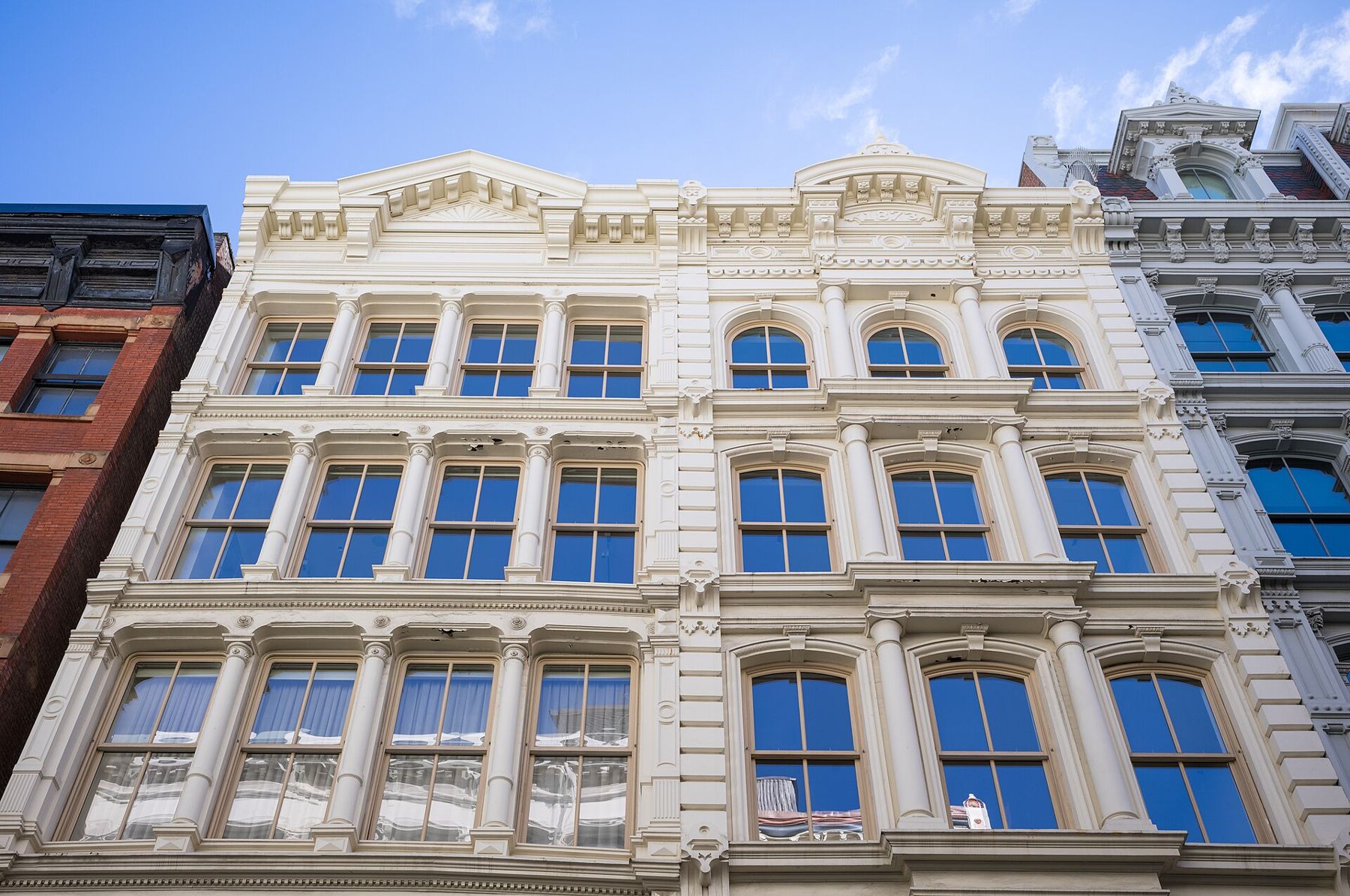
Cast iron was designed to fool you. When builders in New York started putting up iron fronts in the 1850s, the selling point was that iron could look exactly like carved stone at a fraction of the cost and in a fraction of the time. The fronts were cast in sections, bolted together on site, and painted in stone colours, sometimes with sand thrown into the wet paint to give it a gritty texture. From across the street, many of them still pass.
Up close, they give themselves away. Here is how to tell, using nothing but your eyes and, where it is appropriate, a small magnet.
Start with repetition
The most reliable clue is sameness. A stone carver works each capital, each bracket and each window hood by hand, and even the best carver leaves small differences: a leaf a fraction deeper here, a curl slightly fuller there. A foundry pours molten iron into a mould, and every piece from the same mould is identical. Stand across the street from a front and compare two capitals on the same floor, then two on different floors. If they match exactly, down to the smallest notch, you are almost certainly looking at iron.
Repetition also shows in scale. Iron fronts tend to repeat the same bay, the same column and the same window across the whole width of a building and from floor to floor, because it was cheaper to cast many copies of one pattern. Stone fronts more often vary their storeys, getting lighter as they go up.
Look for seams and bolts
Iron fronts are assembled from parts, and the joints show. Look for thin straight lines where one section meets another: down the sides of columns, across the bases of window hoods, along the cornice. These seams are usually tighter and straighter than mortar joints in stone, and they often follow the edges of ornament rather than running in neat horizontal courses.
Then look for bolt heads. Iron sections were fastened together with bolts, and the round or square heads sometimes show on the faces of columns, under sills or at the corners of panels. Stone has no bolts; it is held by its own weight and by mortar, with any iron anchors hidden inside.
Terracotta · WalkBleecker Street's white towerRead the decay
Iron and stone fail in different ways, and the failures are easy to read. When paint fails on iron, you see orange-brown rust, often bleeding down from a joint in a streak. Iron may bubble or blister under the paint, and in bad cases small pieces crack or break off along clean lines. When stone fails, it crumbles, flakes, scales off in layers or turns to sand at the surface, a process called sugaring in limestone and marble and spalling in brownstone. Stone weathers into soft rounded edges. Iron stays crisp until it breaks.
So a sharp-edged column with rust at the base is iron. A softened column with grains of stone at its foot is stone. The story on how limestone weathers shows the stone side of this in detail.
Find the maker's mark
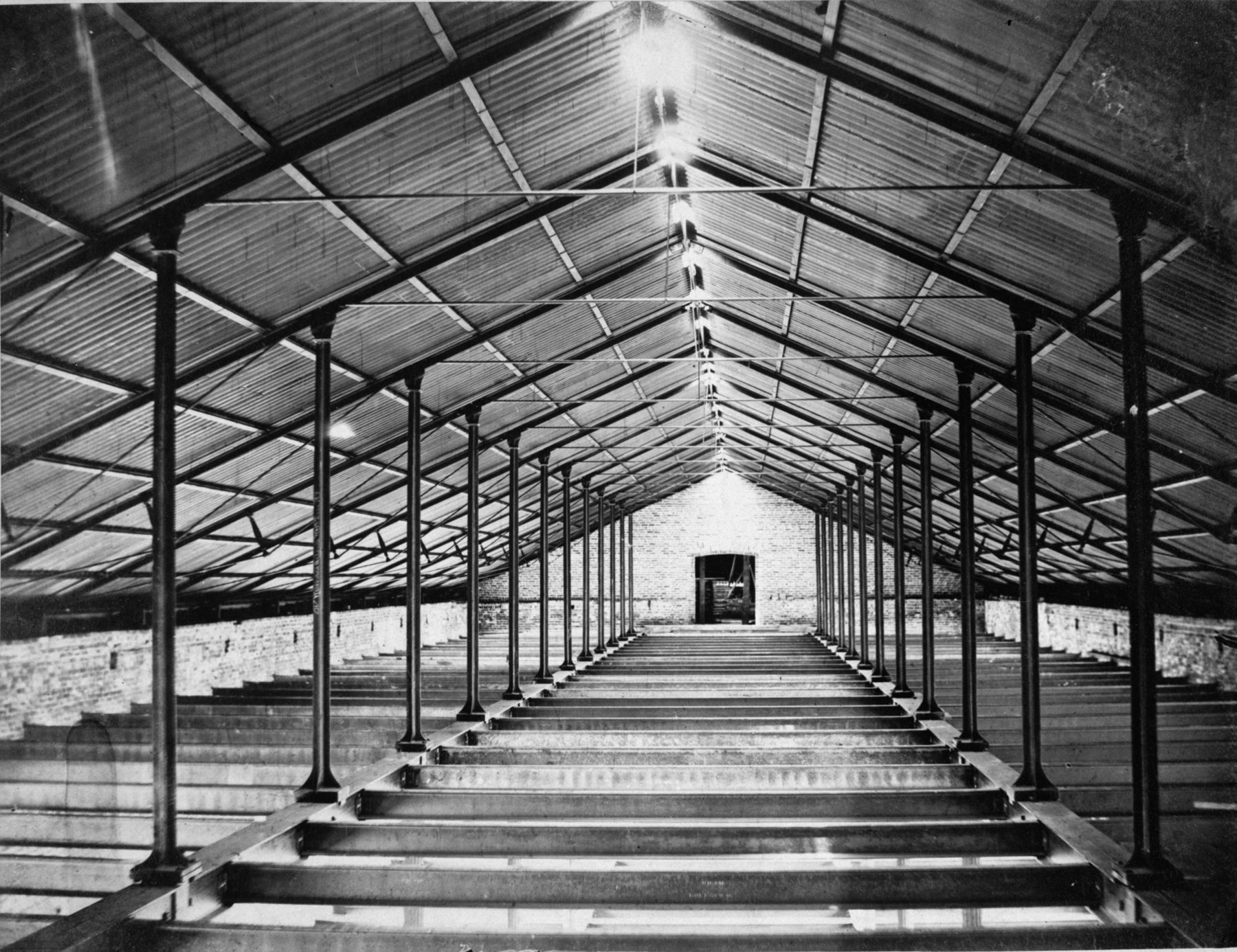
Many foundries cast their names into their work, usually low down where it would be seen by passers-by and buyers. Look at the bases of ground-floor columns, at the iron step plates in front of doorways, and on the iron sidewalk plates near the kerb. You will often find raised lettering with the name of an ironworks and a street address. These marks are among the best evidence on any SoHo street, and they are free to read from the pavement.
The magnet test, used with care
A magnet sticks to iron and not to stone. That is the whole test, and it works even through several coats of paint. Use a small, smooth fridge magnet, not a strong one that could snap against the surface and chip it. Try it only on a part of the facade you can reach from the public pavement, such as the lower face of a column, and never on anything fragile, freshly painted or behind a railing. Do not scratch, tap or pry. If a building has a sign asking people not to touch, or if someone working there asks you to stop, stop. Some owners do not mind at all; others are tired of it. When in doubt, the visual clues are usually enough.
Be aware that the test can mislead. Some iron buildings have stone or brick parts, and some stone buildings have iron columns at the ground floor and stone above. Test more than one element before you decide.
The Haughwout Building as a reference
The best place to calibrate your eye is the Haughwout Building at Broadway and Broome Street, completed in 1857. Its iron front, modelled on a Venetian palace, repeats the same arched window framed by small columns, five rows high and many bays wide, and the repetition is so complete that once you have seen it you will spot iron everywhere. The building is also known for installing one of the first commercial passenger elevators. Stand on the opposite corner and count the identical arches. Then walk a few blocks west to Greene Street and look at the fronts there, including the Queen of Greene Street at numbers 28 and 30, with the same eye.
Stone weathers into soft rounded edges.
Five things to tick off
- Do the ornaments repeat exactly? Likely iron.
- Are there straight seams following the edges of ornament, and bolt heads? Iron.
- Is there rust bleeding from joints? Iron.
- Is the surface crumbling, flaking or sugary, with softened edges? Stone.
- Is there a foundry name cast at the base? Iron, and now you know who made it.
Once you can read these signs, try them on the walk through Greene Street, block by block, and on the fire escapes that hang from so many of these fronts, covered in the iron vocabulary of the facade. Everything on this list can be done from the pavement, and none of it needs you to step inside.
Every photograph on this page is credited, with its licence, on Masons of the lens.